CS is not just coding
Three years out of school, the part of the degree that has held up the most is the part nobody listed in the syllabus. CS is mostly a permission slip into other people's worlds, and that turns out to be the whole point.
Computer Science has to be one of the most diverse degrees on the planet. I keep relearning that every time I look at who I am actually sitting across from in a given week.
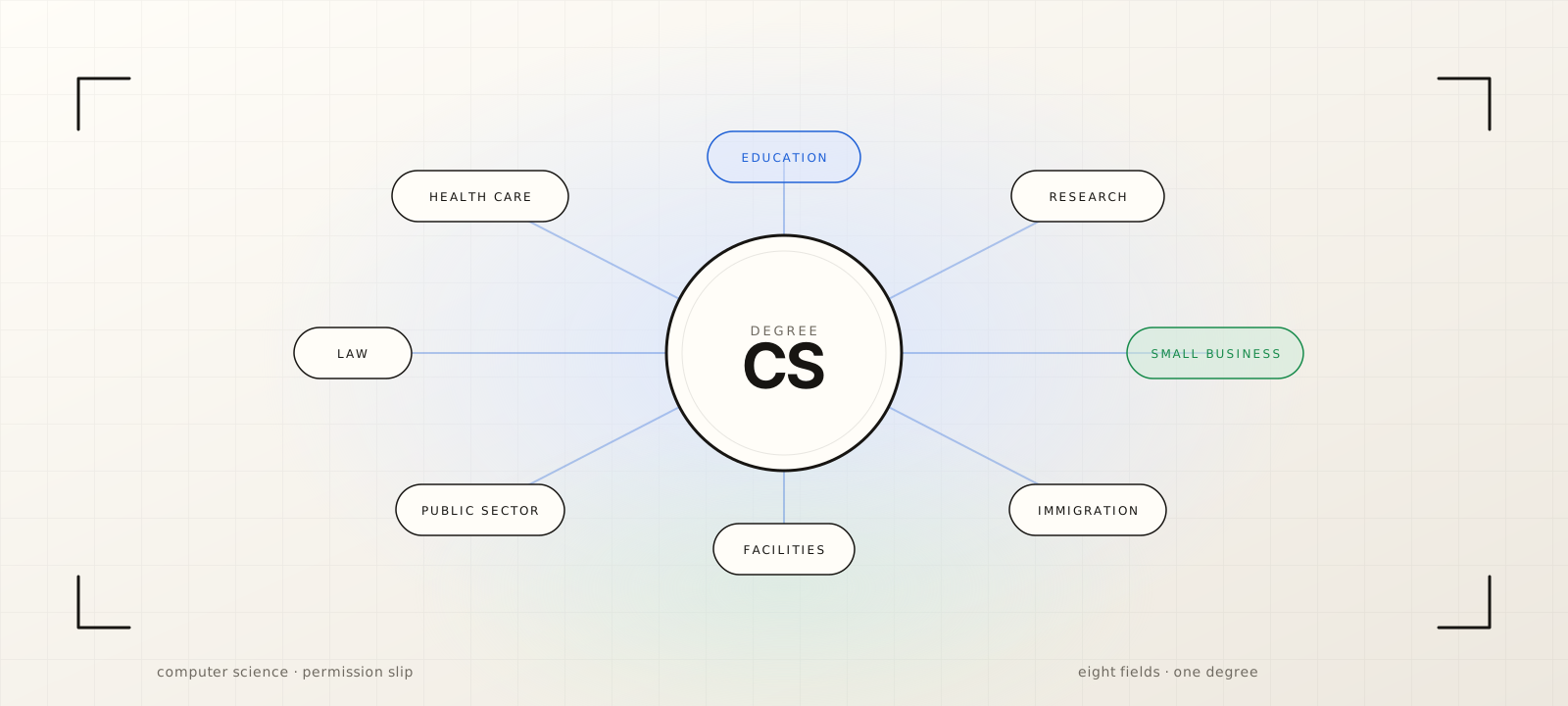
In the last year alone, the work has put me in rooms with lawyers who want to automate the slow parts of their practice, immigrants navigating systems that were not designed for them, small business owners trying to grow without a tech team, health care providers chasing better patient outcomes, facility teams keeping the unglamorous parts of operations running, educators, researchers, and people solving very real human problems every single day.
It is wild how many worlds the degree lets you step into. None of them are the world I imagined when I started, and that is the point.
The thing I did not appreciate at the time
CS is mostly a permission slip. The technical skills are real, and they matter. But the quietly powerful thing they do is let you sit in any of those rooms and meaningfully participate. The lawyer does not need you to be a lawyer. The clinic does not need you to be a clinician. They need someone who can listen carefully, model the problem, and turn it into something that runs.
I am genuinely glad I pursued my dream major. It opened doors I did not know existed and connected me with people I never imagined collaborating with. The kind of doors and people that are hard to find from inside any other discipline.
What the degree is actually about
Each of those words shows up in the work more than the syntax does. Problem solving is a specific kind of discipline that you spend the degree training. Empathy is what makes a bug report make sense, because every bug report is a translation of someone's frustration. Creativity is what gets you past the obvious solution to the one that survives contact with real users.
If you are in it or thinking about it
You are not limited to tech companies. The skill stack is portable across every industry I have touched. The thing I would tell my younger self is to stop optimizing for which company and start optimizing for which problem. Pick the kind of work you want to be useful around. The degree comes with you.
That is what makes CS so powerful, and so much fun to keep doing.
Reach out
If something here resonated, I'd love to hear what you're building. Always open to a good conversation.