Introducing GuideCode
48 hours. Five specialized AI agents. One platform for non-technical founders who want a website without learning prompt engineering. Built at Hornet Hacks 3.0 and trialed live with seven Sacramento small business owners.
48 hours. Five AI agents. One platform. The short version of what came out of Hornet Hacks 3.0 was GuideCode, an AI platform for non-technical founders, and a chance to trial the MVP with seven small business owners in Sacramento right after the demo.
One of them liked it enough to record a seven-minute testimonial on the spot. He plans to use GuideCode to launch two new businesses next year. That was the moment the project stopped feeling like a hackathon stunt and started feeling like a product.
How it started
I went into the weekend with one real goal: build something fun and useful with the new OpenAI Agent Kit. Seven hours in, the orchestration was a mess and one of my teammates tapped out. We could not get even a single agent to behave reliably end to end.
I did not quit. I spent the night going one layer down at a time: how the Agent Kit actually wires runs together, how tools and handoffs are supposed to compose, how to fail loudly when an agent goes off script. By the next morning, five specialized agents were running in concert and the platform was real.
What GuideCode does
GuideCode helps non-technical founders ship websites and apps without getting lost in technical jargon.
Picture this. You are a small business owner. You just made your first hundred sales and you want a website to grow online. You check the freelance marketplaces and the quotes are in the thousands. You try the new generation of vibe-coding tools like Lovable and v0, and after hundreds of chat turns you are still missing your actual vision, because prompt engineering is its own skill you never trained for.
That is the problem GuideCode is built around.
Why multiple agents
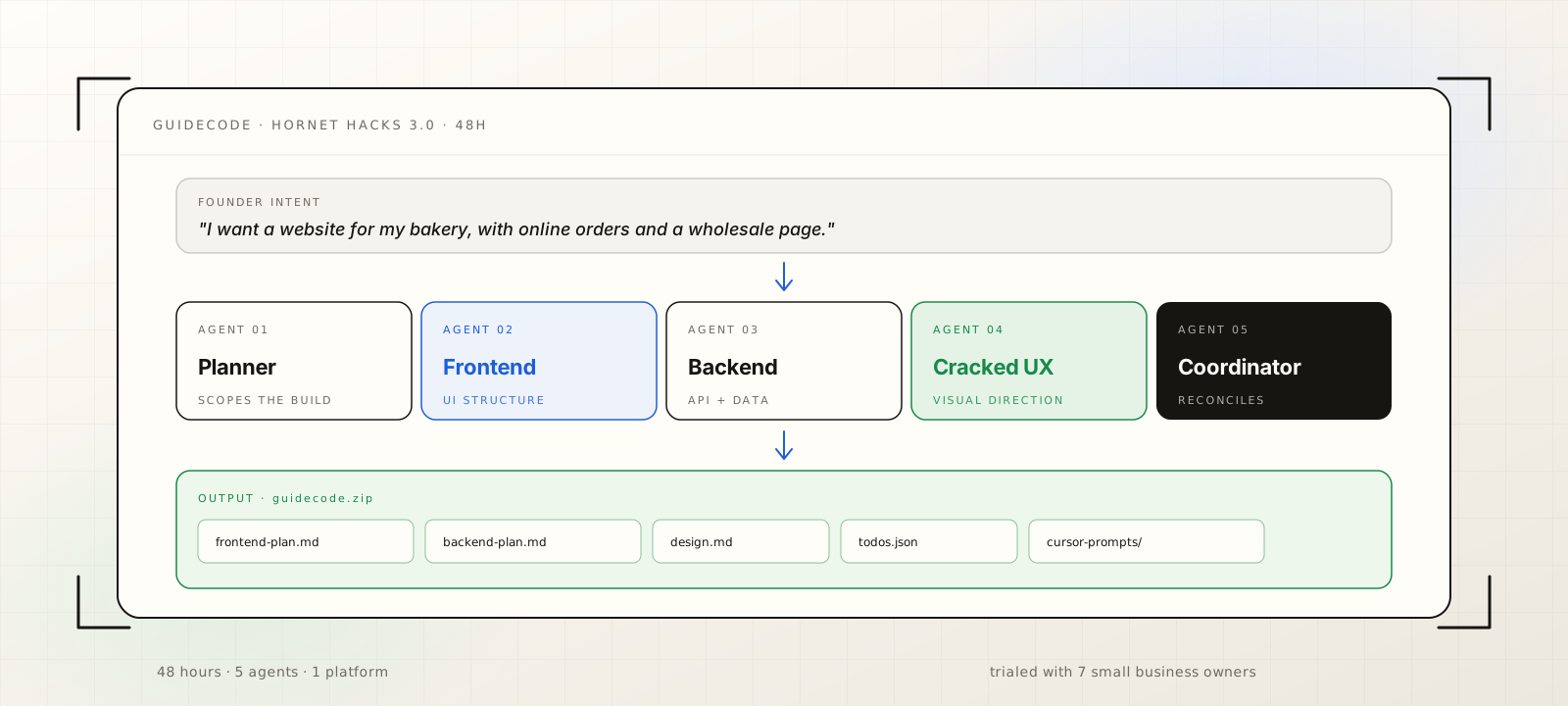
Instead of one confused chat agent trying to do everything, GuideCode uses a small team of specialists. Each agent owns one piece of the work:
- A Planner that turns the founder's intent into a concrete project plan.
- A Frontend agent that scopes UI structure and decides what the build actually needs.
- A Backend agent that proposes data models, API surfaces, and integrations.
- A Cracked UI/UX agent (named affectionately) that translates vague visual intent into something concrete and good-looking.
- A Coordinator that keeps the other four honest and reconciles their outputs into one coherent plan.
Single-agent tools usually fail the same way. The model has to be everything at once and ends up averaging itself into mediocre. Splitting roles forces each agent into a narrower context, with clearer prompts and clearer evals. The output gets noticeably better, and so does the debugging story when something does go wrong.
What it ships
At the end of a session, GuideCode hands the founder a zip file:
- Structured project plan markdown files for frontend, backend, and design.
- A Jira-style to-do list a non-engineer can actually read and use to track work.
- Cursor-ready prompts for each task, written in the style and naming the planner set up earlier.
The zip is the handoff. It is intentionally not a magic deploy button. The founder can take it to a freelancer, a friend who codes, or a Cursor session of their own, and the plan does most of the cognitive heavy lifting that usually gets lost in translation.
What the seven trials told me
Showing the MVP to seven small business owners after the demo was the most useful hour of the whole weekend. The patterns:
- Founders want to feel like they understand the plan, not just trust it. The plain-language markdown files mattered more than I expected.
- The visual side is where everyone wanted more. The Cracked UI/UX agent will get the bulk of the next iteration.
- Cursor-ready prompts surprised people. Several had heard of Cursor but had not connected it to: this is how I get a real result without learning to code.
What is next
48 hours. No sleep. A lot of trial and error. Worth it. Next on the list is a real UI for the orchestration, deeper evals on each agent role, and an actual onboarding flow for the founder side of the experience.
Thanks to Amena Saher for the frontend input that nudged the demo from rough to presentable.
References
- 01OpenAI Agents SDK · platform.openai.com
- 02Cursor · cursor.com
- 03Lovable · lovable.dev
- 04v0 by Vercel · v0.dev
Reach out
If something here resonated, I'd love to hear what you're building. Always open to a good conversation.